
MSOF is moving! New location: 3624 S Main St, Salt Lake City, UT 84115 — opening soon
MSOF has a new location! 3624 S Main St, Salt Lake City, UT 84115 — NOW OPEN
Strategic Office Space Planning for Modern Utah Workplaces
The difference between a workplace that simply functions and one that actively supports growth often comes down to one thing: office space planning. At Main Street Office Furniture, we help businesses throughout Salt Lake City and Utah create smarter, more efficient workplaces through strategic office space planning.
Whether you're moving into a new office in Downtown Salt Lake City, expanding your footprint in Lehi, renovating a workspace in Sandy, or optimizing an existing office in Ogden, thoughtful planning ensures your workplace supports both your employees and your long-term business goals.
Office space planning is about more than deciding where a desk goes. It is the process of analyzing how people work, how departments interact, and how available space can be organized to improve efficiency, collaboration, and employee experience. Businesses can create environments that support productivity for years to come.

See our work in action—explore our portfolio to discover how we’ve transformed office space with innovative furniture design and thoughtful planning. Get the inspiration you need to reimagine your own office or home office.
MSOF
Office space planning is the strategic process of organizing an office environment to maximize functionality, support employee needs, and improve overall workplace performance.
Rather than focusing solely on aesthetics, office space planning examines how people use space throughout the day. It considers movement patterns, department relationships, work style preferences, technology requirements, future growth, and operational goals.
Effective office space planning helps businesses answer important questions such as:
The answers to these questions shape a workplace that functions more effectively while supporting future business growth.

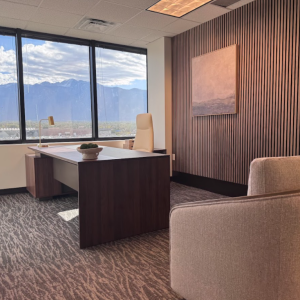
Many businesses underestimate the impact that planning has on workplace performance. Poor planning often leads to overcrowded workstations, underutilized meeting spaces, inefficient traffic flow, and costly real estate decisions.
Effective office space planning helps organizations:
When planning is approached strategically, businesses often discover opportunities hidden within their existing space before investing in larger facilities.
Every office space planning project begins with understanding how the workplace functions today.
The first step involves evaluating the existing space and identifying opportunities for improvement. We analyze workspace utilization, department interactions, circulation patterns, and overall efficiency.
Many businesses are surprised to discover how much available space exists within their current office once planning inefficiencies are addressed.
Every workplace is unique. Some organizations require quiet private spaces for focused work, while others thrive in highly collaborative environments.
Understanding employee needs allows us to create solutions that support productivity while improving overall workplace satisfaction.
We begin by learning how your organization operates. Through interviews, observations, and workplace analysis, we gain insight into how employees use space throughout the workday.
Our office planning process focuses on measurable workplace performance. We evaluate occupancy patterns, departmental relationships, space usage trends, and workflow requirements to inform planning decisions.
Every project includes a customized floor plan designed around operational efficiency and future growth. The goal is to maximize floor space while maintaining flexibility.
A well-designed office layout improves movement, communication, and productivity. We carefully position departments, workstations, meeting spaces, and support areas to create a more effective workplace.
Planning and furniture selection should work together. We incorporate office furniture, ergonomic furniture, modular furniture systems, and storage solutions that support the overall workplace strategy.

The modern workplace continues to evolve. Many organizations throughout Salt Lake City, Draper, South Jordan, and the Silicon Slopes region are adapting to hybrid work models.
A successful hybrid workplace requires thoughtful planning that balances in-office collaboration with flexibility.
Key considerations include:
Hot desking allows employees to utilize shared workstations rather than permanently assigned desks, reducing unused space while increasing flexibility.
Dedicated collaboration zones encourage teamwork, brainstorming, and informal meetings without disrupting focused work areas.
Meeting spaces must accommodate a variety of activities, from one-on-one conversations to large team discussions.
Shared space strategies help businesses maximize available space while supporting changing workforce needs.
While every project is unique, several office space planning guidelines consistently contribute to better workplace outcomes.
Open space can encourage communication and teamwork, but employees also need access to private spaces for focused work and confidential discussions.
Workplaces designed around employee experience often achieve stronger engagement, retention, and productivity.
Office planning should account for future expansion and changing workforce needs.
Modern employees perform different types of work throughout the day. The workplace should support focused tasks, collaboration, meetings, and social interaction.
Every square foot should contribute value to the organization.
MSOF
Individual workstations remain the foundation of most office environments. Proper workstation planning supports focus, organization, and daily productivity.
Meeting rooms should be sized and distributed based on actual workplace usage patterns rather than assumptions.
A conference room often serves as a central hub for communication and decision-making. Strategic placement improves accessibility and utilization.
Collaborative spaces encourage innovation and teamwork while supporting project-based work.
Private office environments remain important for leadership teams and roles requiring confidentiality or focused concentration.
Break areas, gathering spaces, and informal meeting locations contribute to a stronger workplace culture.
Office space planning is ultimately about creating a workplace that supports business goals while making better use of available space.
Whether your organization occupies a small professional suite in Sugar House, a growing office in Lehi, or a large corporate facility in Downtown Salt Lake City, planning directly impacts performance, efficiency, and employee satisfaction.
Strategic planning helps businesses:
When planning is done correctly, the workplace becomes a tool that actively supports business success.
Every project should address the following:
This office space planning checklist helps ensure every decision supports long-term workplace performance.
Whether you’re relocating, expanding, renovating, or simply trying to make better use of your current office space, Main Street Office Furniture can help.
Contact our team today to discuss your office space planning goals and learn how strategic planning can transform your workplace into a more efficient, productive, and adaptable environment.